

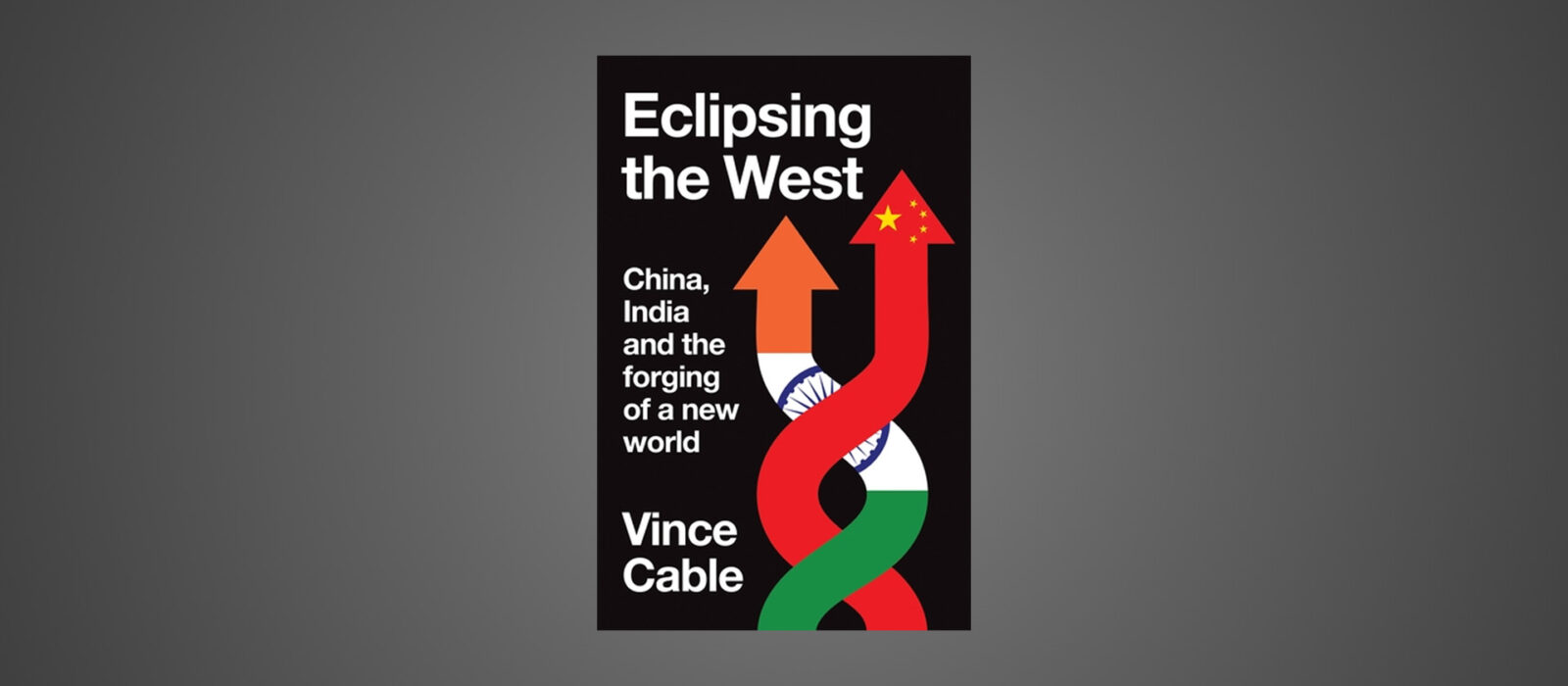
A new paperback edition of Sir Vince Cable’s impressive economic study of China and India continues to offer valuable insights into Asia’s largest markets, now with a gloomier conclusion informed by the war in Iran.
First published last year, Eclipsing the West examines the performance of Asia’s two largest economies and interrogates the argument that India could pull ahead of China, “tortoise and hare” style.
Instead of making bold predictions, Sir Vince applies the approach he says he developed while working for Shell in the 1990s, mapping out three potential scenarios for the future in our “world of radical uncertainty”. On top of his economic analysis, he draws on the work of political scientist Graham Allison and economic historian Charles P. Kindleberger to identify the geopolitical risks.
The coming into force earlier this summer of the UK and India’s free trade agreement – which has drawn much interest from the Scotch whisky industry in particular – makes this comparison of the Indian and Chinese stories particularly timely.
Sir Vince delves into the detail of why democratic India has more slowly opened up to world trade than communist China, and the major economic challenges for both countries – from India’s notorious bureaucracy and low manufacturing base, to China’s property bubble and the collision of its export strategy with Trumpism and protectionist winds.
“… an extraordinary situation has been reached whereby China is now able to present itself as a champion of free trade, open markets and multilateral rules in the face of American protectionism and unilateralism – and to do this while posing as a leader of the Global South. The story is sufficiently implausible that it may not last.”
Sir Vince Cable, Eclipsing the West
As well as examining both countries’ relationship with the wider world, Sir Vince also offers insights into their bilateral relationship as “frenemies”. He highlights their conflicting as well as shared interests, and considers how these expose the limitations of their common international forums like BRICS, which some overly enthusiastic supporters have cast as an embryonic alternative to the US-led world order. The close interest he pays to how these shifts in the global economy could impact the urgent need to combat climate change is particularly welcome, even if his conclusions are largely pessimistic.
Few books of this wide scope require a significant update just one year after publication, but the US and Israel’s joint attack on Iran in February this year merits the attention paid in a new postscript included in the paperback edition – in particular as it contradicts the book’s original, and already somewhat dubious, claim that President Trump “seems to be genuinely averse to military conflict”.
Taking us from the very beginning of China’s reform era to a present where the AI-innovating “science superpower” appears to be on the precipice of finally achieving its coveted high-income status, Sir Vince has compiled a staggeringly vast amount of hard data and economic insight into a remarkably easy and enjoyable read. Scots seeking greater insight into the future of the global economy have few better places to start.
Eclipsing the West: China, India and the forging of a new world by Vince Cable. Published by Manchester University Press, 368pp, £12.99.
Enjoyed this story?